

How to Lubricate a Garage Door the Right Way (And Why WD-40 is Wrong)
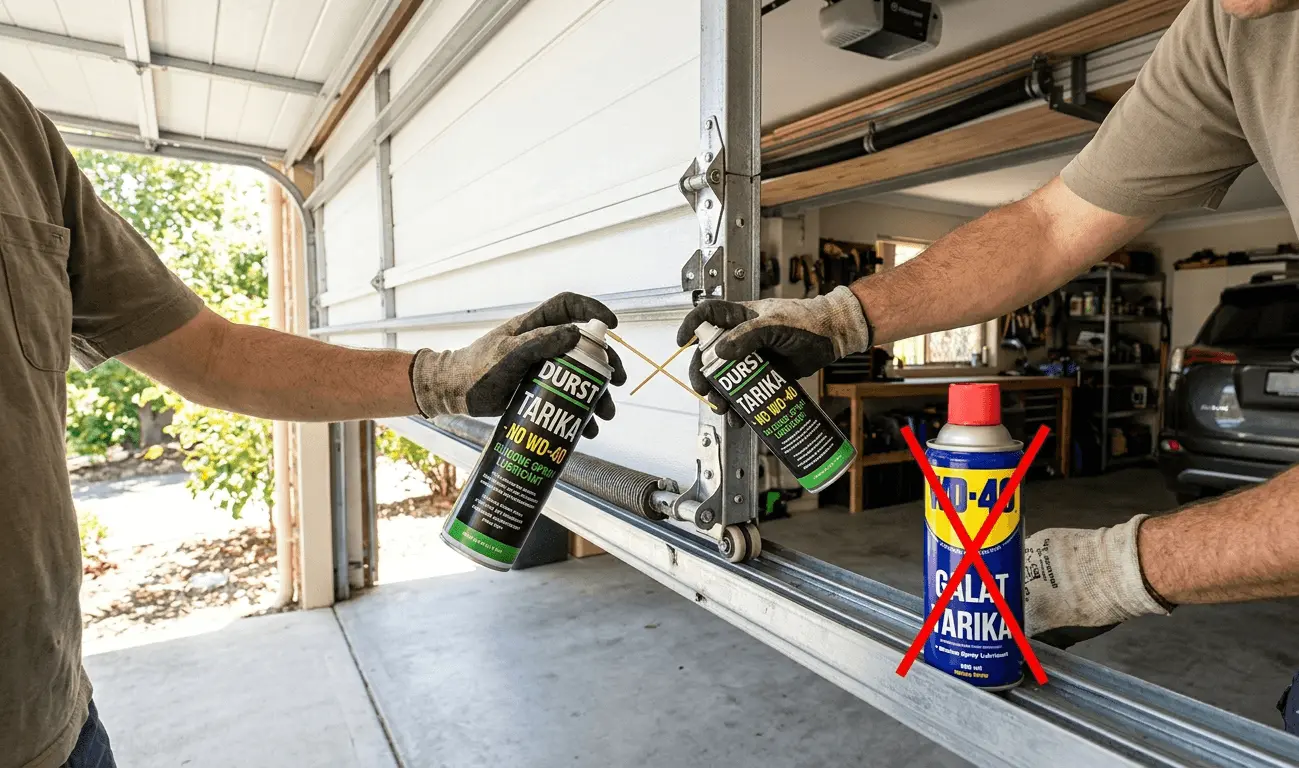
Your garage door is squeaking. You grab the WD-40. Problem solved, right? Wrong. WD-40 is one of the most common garage door mistakes Australian homeowners make. It makes the noise stop for a day or two, then makes everything worse. This guide tells you exactly what to use, where to apply it, and how to keep your door running quietly for years.
Why WD-40 Damages Your Garage Door
WD-40 is a water displacer and light solvent. It is not a lubricant.
When you spray WD-40 on garage door components, it does three things. It washes away the existing lubrication. It attracts dust and grit into the moving parts. And it evaporates within days, leaving the metal drier than before. The result is increased friction, accelerated wear, and a door that sounds worse within a week.
What Happens to the Rollers
Rollers spin inside the track on a small bearing. That bearing needs grease to stay smooth. WD-40 strips that grease out completely. Within a few weeks, the bearing seizes, the roller stops spinning, and it drags along the track instead of rolling.
Dragging rollers are one of the most common causes of track damage we see in Toowoomba homes.
What You Should Actually Use
Use one of these two products. Both are available at Bunnings.
Silicone-based spray lubricant is the easiest option. It goes on thin, stays clean, and does not attract dirt. Good for hinges, rollers, and the inside of the track.
White lithium grease is thicker and lasts longer. It is better for springs and the opener drive chain or drive screw. It comes in a spray can or tube.
Do not use petroleum-based lubricants, cooking oils, or general-purpose sprays. They attract grit and break down fast in Toowoomba’s summer heat.
Where to Apply Lubricant Step by Step
This takes about ten minutes. Do it twice a year, once before summer and once before winter.
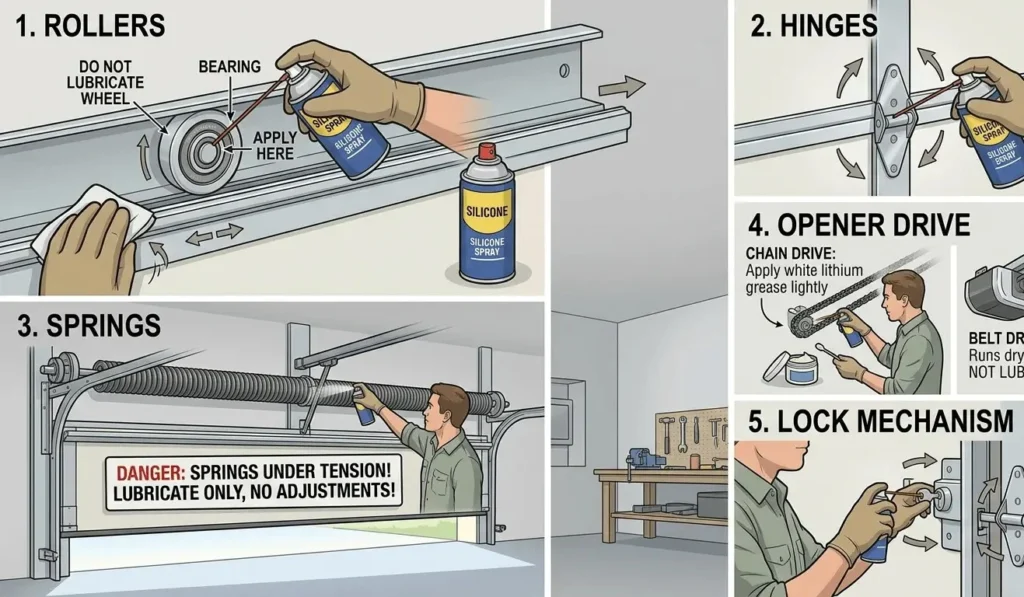
Step 1: Rollers
Close the door and look at the rollers. Spray lubricant directly into the roller bearing< the centre of the wheel, not the wheel itself. Wipe off any excess. Open and close the door once to work the lubricant in.
Do not spray the roller tracks. A dry track is better than a slippery one. Slippery tracks cause rollers to slide instead of roll, which creates noise and wear.
Step 2: Hinges
Your garage door has metal hinges connecting each panel. Spray the pivot point of each hinge< where one piece of metal rotates against another. Move the door up and down to work it in.
If your door has nylon hinges, do not lubricate them. Nylon does not need it, and lubricant can actually cause nylon to swell.
Step 3: Springs
For torsion springs above the door, spray lightly along the full coil. Do not soak them. A light coat is enough.
Do not attempt to adjust spring tension yourself. Springs are under extreme load and cause serious injuries when mishandled. Lubrication only — no adjustments.
Step 4: Opener Drive
If you have a chain drive opener, spray the chain lightly with white lithium grease. Wipe off excess.
If you have a belt drive, do not lubricate the belt. Belt drive openers are designed to run dry.
If you have a screw drive, apply white lithium grease to the full length of the screw.
Step 5: Lock Mechanism
If your door has a manual lock, spray a small amount of lubricant into the lock cylinder and the lock bar guides. This prevents the lock from seizing, which is common in Toowoomba winters when temperatures drop near zero.
Still Noisy After Lubricating? Here Is Why
Lubrication fixes the noise caused by friction. It does not fix noise caused by worn parts or structural problems.
If your door is still noisy after a proper lubrication, the cause is likely one of these.
Grinding or scraping means the rollers are worn out, or the track has a bend. Neither of these is fixed by a lubricant. The rollers need replacing, or the track needs straightening.
Loud bang or pop: when the door moves means a spring is failing. This is a warning sign. A spring that pops under load is close to snapping. Call a technician before it fails.
Rattling: means loose hardware — bolts, brackets, or hinges are working themselves loose. Tighten every visible bolt on the door frame, track brackets, and hinges with a socket wrench.
Vibration from the ceiling: means the opener mounting brackets have loosened from the ceiling. Tighten the bolts and add anti-vibration pads if the problem persists
How Often Should You Lubricate
Twice a year is the standard recommendation. In Toowoomba specifically, we suggest doing it in October before summer heat arrives, and again in April before the cold sets in.
If your door runs more than ten cycles a day — a busy household or a home-based business — lubricate every three to four months.
A well-lubricated door is a fast one. You will notice the opener working less hard, quieter operation, and a door that responds quicker to the remote.
When to Call a Professional
Lubrication is maintenance. It does not replace repairs.
Call us if the door is still noisy after lubrication, if a spring has snapped, if the door is crooked or one side is lower than the other, or if the opener motor sounds strained after the door is properly lubricated.
We service all Toowoomba suburbs, Highfields, Oakey, Westbrook, Clifton, Pittsworth, Gatton, and everywhere in between.
📞 Call 07 4518 4061 for a same-day inspection. We carry lubricants, rollers, and springs in the van.
Frequently Asked Questions
Can I use WD-40 on my garage door?
No. WD-40 is a solvent and water displacer, not a lubricant. It strips existing grease, attracts dirt, and evaporates within days. Use a silicone-based spray or white lithium grease instead.
What is the best lubricant for a garage door in Australia?
A silicone-based spray lubricant is the easiest and most versatile option. White lithium grease is better for springs and chain drives. Both are available at Bunnings and most hardware stores.
How often should I lubricate my garage door?
Twice a year for most households. In Toowoomba, lubricate in October before summer and in April before winter. Busy households should lubricate every three to four months.
Why is my garage door still squeaking after I lubricated it?
If the door is still noisy after proper lubrication, the issue is likely worn rollers, a bent track section, or loose hardware — not a lubrication problem. These need repair, not more lubricant.
Should I lubricate the garage door track?
No. Tracks should be kept clean but dry. A lubricated track causes rollers to slide instead of roll, which creates more noise and wear than a dry track.How long does garage door lubrication last? Silicone spray lasts around three months. White lithium grease lasts up to six months. Toowoomba’s summer heat accelerates breakdown, so check the door before each season.

